Measuring an impressive 7 meters (23 feet) in width, the uniquely-hued manta ray was first spotted off the coast of Kona, Hawaii by photographer Justin Hoffman. After getting a good look at it, Hoffman quickly alerted fellow divers and researchers who have still been trying to get an up close and personal glimpse of the elusive creature since then.

While biologists are still not entirely sure what causes some animals to turn pink – Albino animals lack melanin, which gives most creatures their normal coloring – they believe that this particular manta ray is suffering from leucism; a condition where only certain parts of its body turned white or pale pink as opposed to being completely devoid of pigment cells.
While the creature’s pink color might be a bit of an anomaly, it is not cause for alarm. The manta ray’s slightly pink hue is likely due to its diet of krill, which are rich in carotenoids (natural pigments), according to Queensland Manta Ray Research.

Mantas aren’t the only animals with varying skin colors; many fish species exhibit different hues depending on their age, sex and location. For instance, salmon typically have bright shades of red and orange because they swim upstream to spawn in streams where that type of coloring provides camouflage among the reddish-brown rocks.
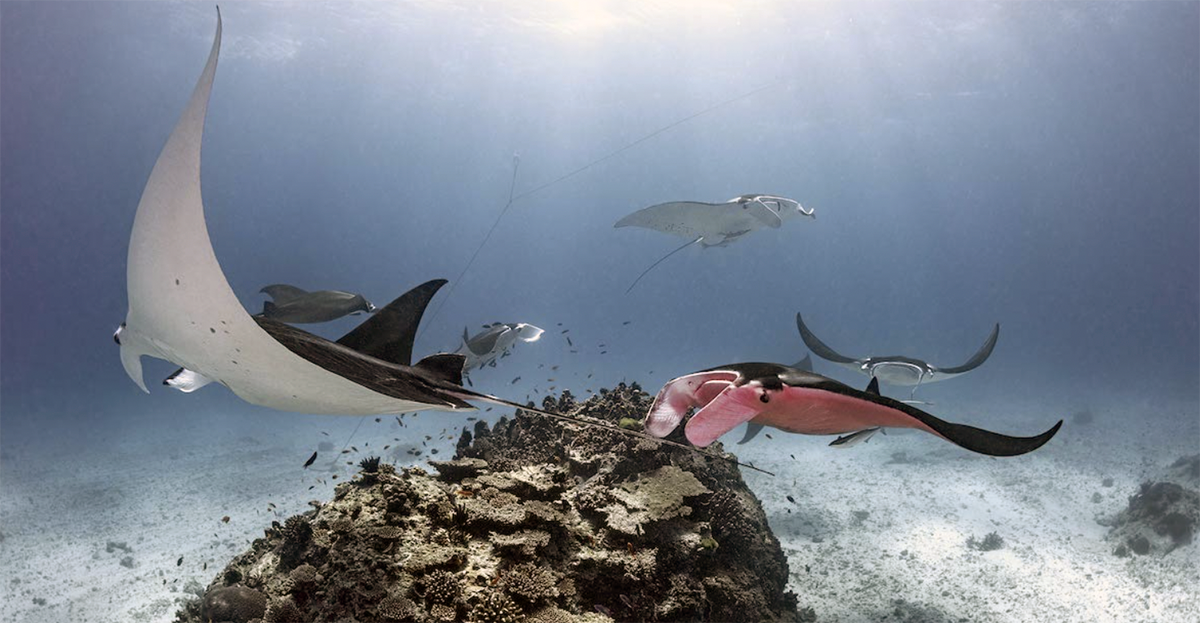
The knight’s armor is in the shape of a pink manta ray.
But while they may be rare, pink manta rays do exist and are often found in tropical or subtropical seas. NOAA (National Oceanic and Atmospheric Administration) points out that the animals’ color can vary depending on their age, exposure to sunlight, and location.
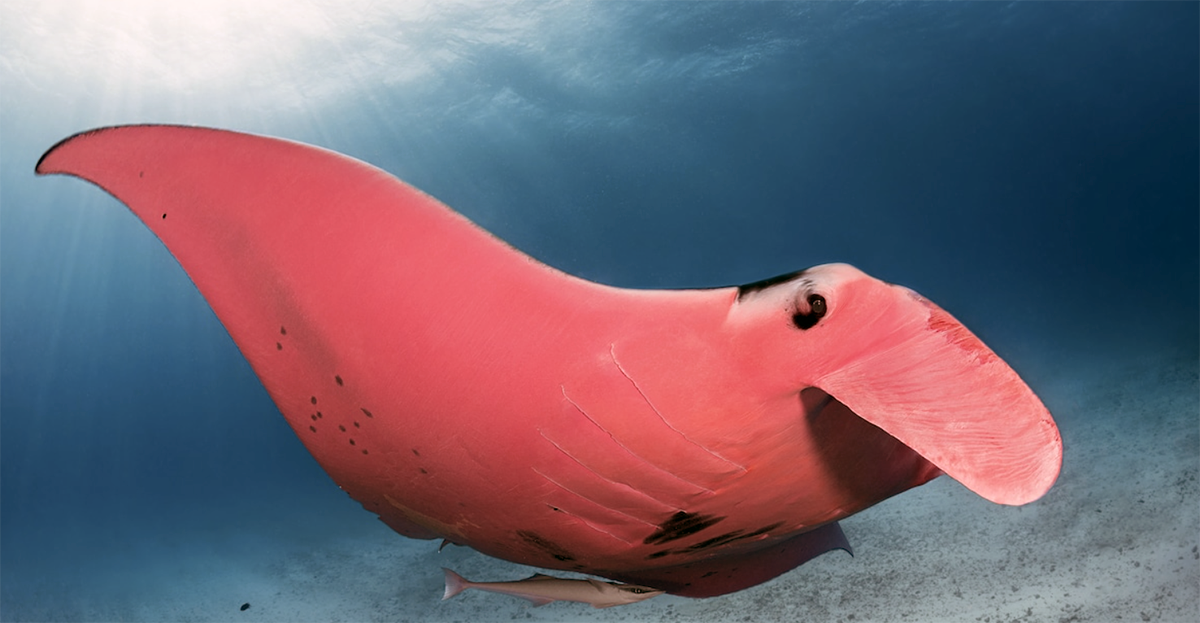
Although it isn’t certain what exactly causes Inspector Clouseau’s pink skin, one possible explanation is that he has a condition known as erythrism. This is a disorder that results in a lack of natural pigmentation, and can cause the affected individual to have a pink complexion.